2,000 Years in the Making
Split's story begins not as a city but as a private retirement residence — one of the most ambitious building projects of the late Roman Empire. From those imperial origins, it evolved through Byzantine rule, medieval Croatian kingdoms, centuries of Venetian dominance, and the turbulent 20th century into the thriving city it is today.
Few cities in the world can claim such an unbroken thread of continuous habitation within a single set of ancient walls. Split is not a museum — it is a living city that happens to exist inside a Roman palace.
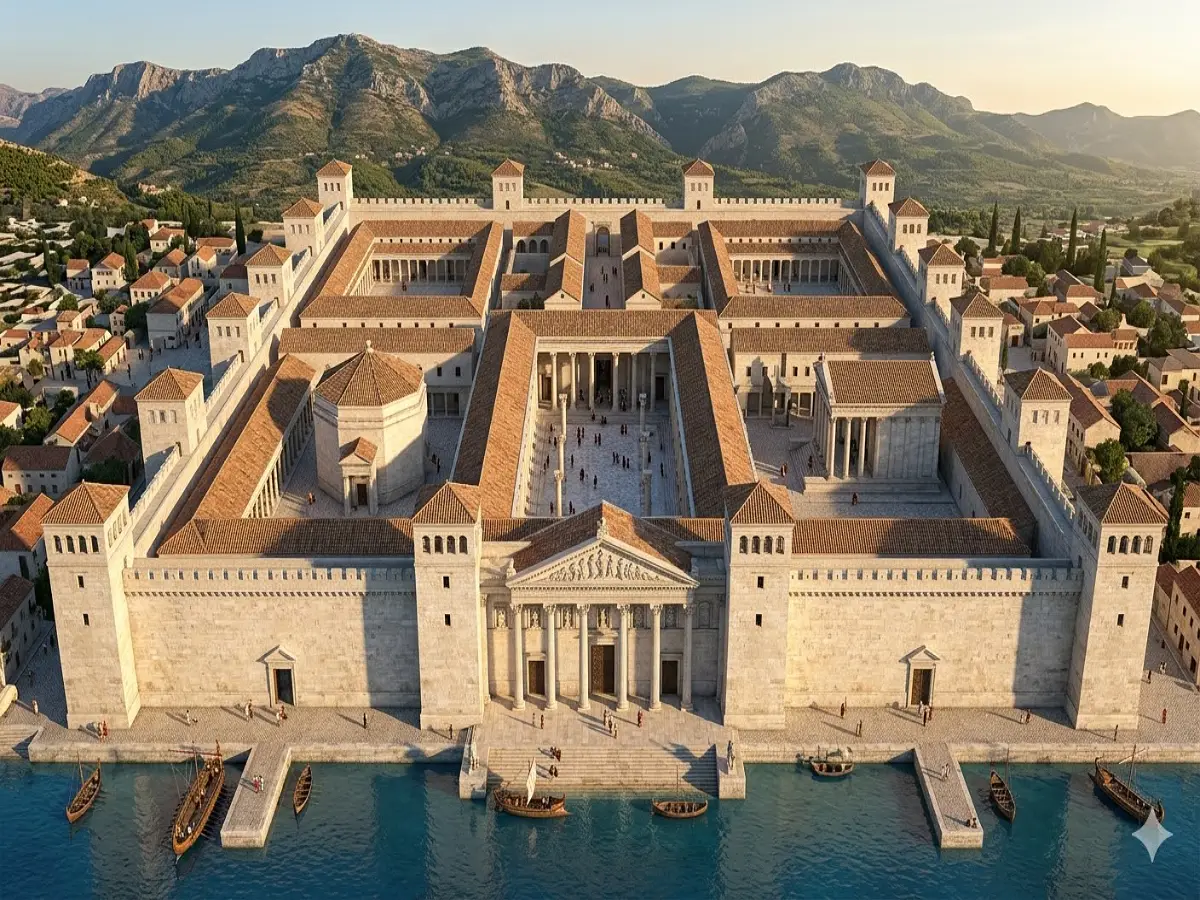
Key Periods in Split's History
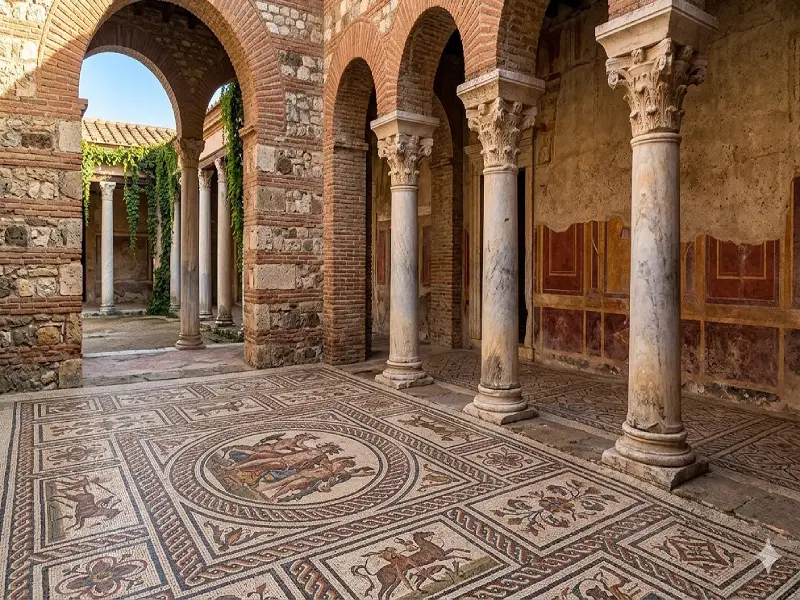
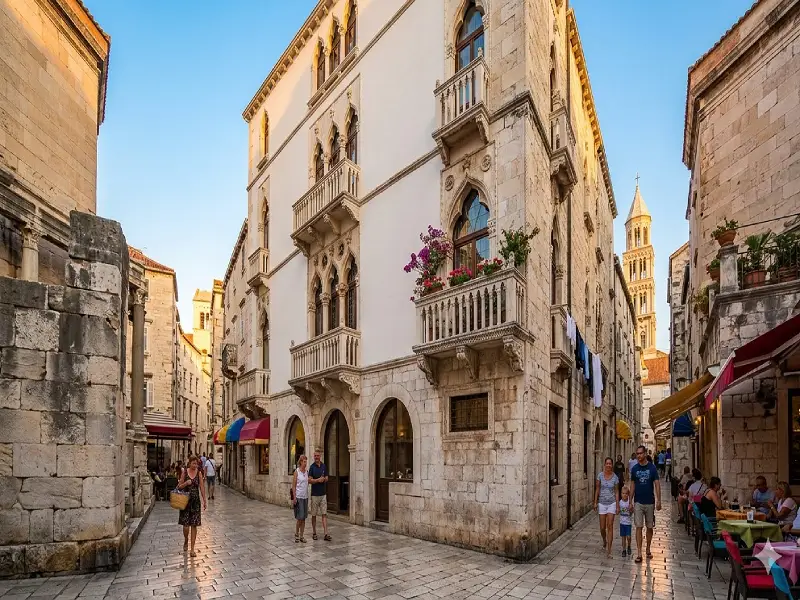
UNESCO World Heritage — 1979
Diocletian's Palace and the medieval historic core of Split were inscribed as a UNESCO World Heritage Site in 1979 — recognised as one of the most complete and best-preserved Roman palace complexes in the world, and unique for being a living, inhabited historic monument.
Diocletian's Palace — Architecture & Layout
The palace is simultaneously a Roman fortress, an imperial residence, a military barracks and a living city. Its four gates, two main streets and central peristyle remain the skeleton of Split today.
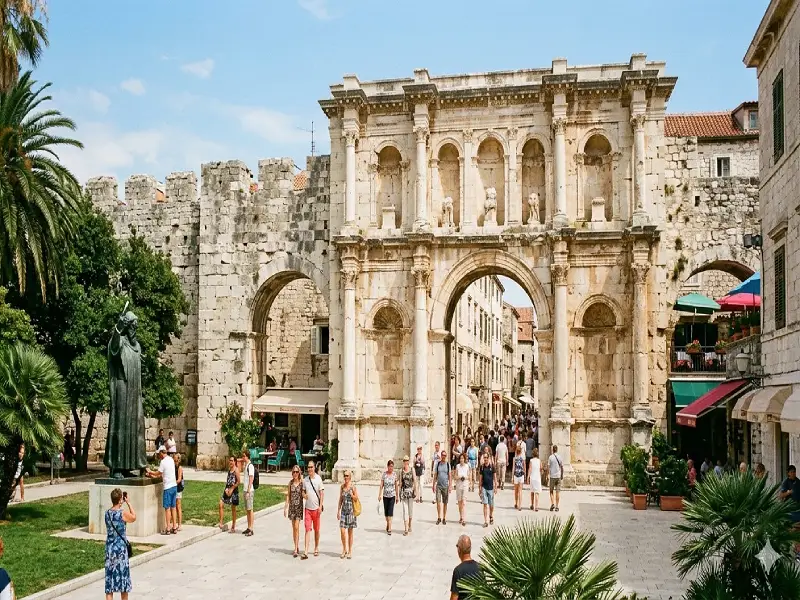
The Golden Gate (Porta Aurea) — the north entrance, most impressive of the four gates
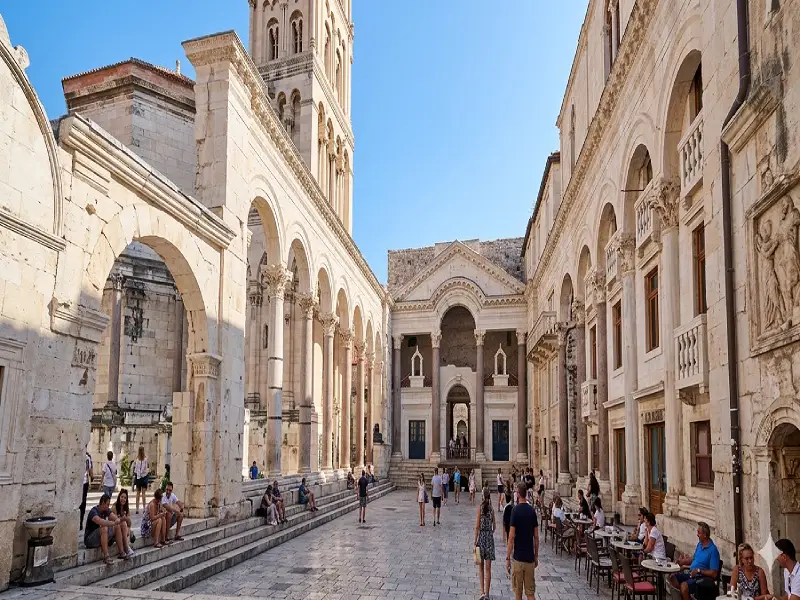
The Peristyle — the main ceremonial square, still the social heart of Split